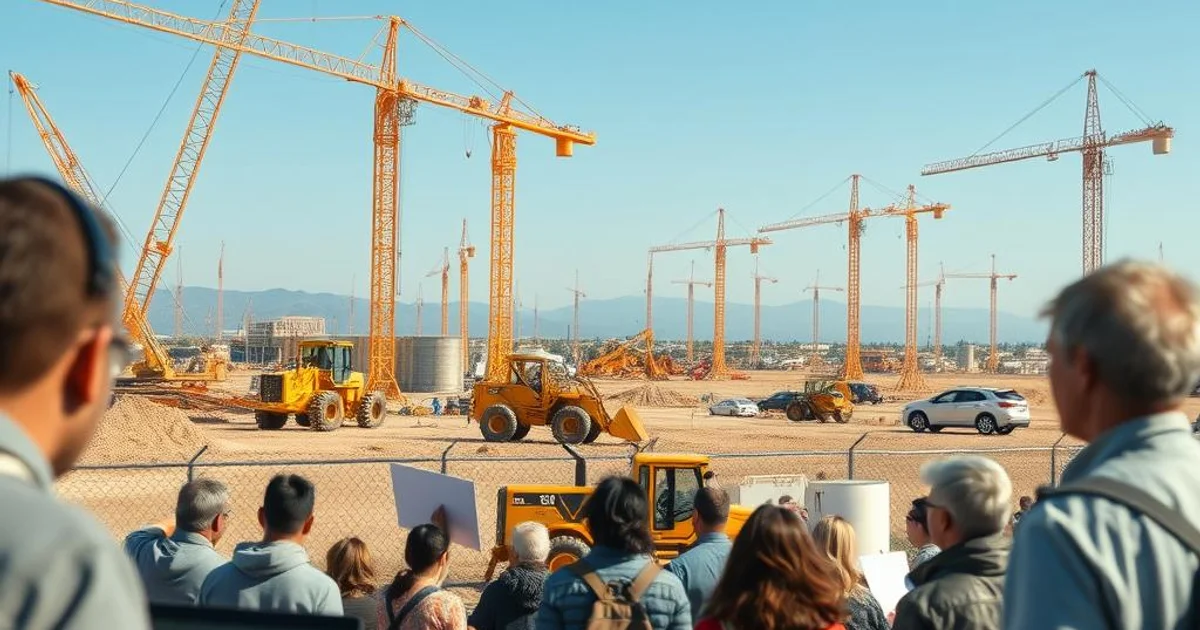
Data center construction disruptions surge in first quarter of 2026 as grassroots opposition grows
At a glance:
- 75 data center projects worth $130 billion disrupted in Q1 2026, matching full-year 2025 totals
- Anti-data center grassroots groups now active in 49 states with 14 statewide measures introduced
- Public opposition hardening: majority of Americans now strongly oppose local data centers
What happened: the numbers behind the disruption
A new report from Data Center Watch, a project maintained by AI research firm 10a Labs, reveals that grassroots activism disrupted 75 data center construction projects across the United States during the first quarter of 2026. The affected projects carry a combined valuation of $130 billion, representing a staggering acceleration in opposition-led delays. NBC News characterized the figure as the highest three-month total since the group began systematic tracking in 2023, noting that the first quarter alone matched the disruption level recorded for all of 2025.
The data suggests a structural shift in the politics of digital infrastructure. Where data center siting once proceeded with routine permitting, developers now face organized local resistance at a scale that threatens to reshape investment timelines for cloud and AI capacity. The $130 billion in stalled capital underscores the financial stakes for hyperscalers, colocation providers, and the supply chain that serves them.
Public sentiment shifts sharply against local data centers
Parallel polling from Heatmap Pro confirms that public opinion has moved decisively against new data center construction in residential areas. A majority of Americans now say they would "strongly" oppose a data center being built in their community, a marked change from just nine months earlier when the population was roughly evenly split on the question. The survey captures a rapid hardening of attitudes that correlates with increased media coverage of water usage, energy demand, and noise complaints associated with large-scale facilities.
For developers, the polling data translates into a more hostile permitting environment at the county and municipal level. Local officials facing organized opposition and clear constituent sentiment are less likely to approve zoning variances or tax incentives that once greased the wheels for data center campuses. The sentiment shift also complicates community benefit agreements, as opponents increasingly reject negotiation frameworks altogether.
Policy landscape: statewide measures proliferate
The Data Center Watch report documents anti-data center grassroots groups now operating in 49 states, a near-universal footprint that reflects the issue's migration from niche environmental circles to mainstream political organizing. In the first three months of 2026 alone, 14 statewide legislative measures targeting data center development were introduced, ranging from moratoriums to stricter water and energy reporting requirements. The pace of legislative activity suggests that state capitols have become the primary arena for the fight over digital infrastructure siting.
Maine illustrates the dynamic: a moratorium bill passed the legislature but was struck down by the governor, who signaled she would sign a slightly altered version. That exchange — veto paired with a roadmap for passage — exemplifies how the policy debate has moved beyond simple yes-or-no votes into iterative legislative crafting. Other states are watching Maine's template closely as they draft their own measures.
Industry pushback: the contrarian view
Not all observers accept the prevailing narrative. On Friday, The Atlantic published a contrarian essay by assistant editor Elias Wachtel arguing that "the data-center panic is overblown." Wachtel contends that many complaints inflate the costs of data centers while overlooking contexts where they bring tangible benefits, from tax revenue to grid modernization investments. "If saying no is good politics, it isn't always good policy," he writes, framing the opposition as a case of political expediency trumping long-term infrastructure planning.
The essay reflects a growing effort by industry allies to reframe the debate around economic competitiveness and national security, particularly as AI workloads drive unprecedented demand for compute capacity. However, the political momentum remains with opponents, and the policy window for proactive industry engagement may be narrowing as statewide measures advance.
What this means for the data center boom
The convergence of grassroots organizing, shifting public opinion, and legislative action creates a new risk layer for the data center construction boom that has underpinned the AI investment thesis. With $130 billion in projects disrupted in a single quarter, capital allocation models that assumed predictable permitting timelines now face significant uncertainty. Hyperscalers and developers may need to factor in longer pre-construction phases, higher community investment budgets, and the possibility of statewide restrictions that render entire regions off-limits.
Looking ahead, the key variables are the fate of the 14 pending statewide measures, whether federal legislation emerges to preempt local bans on critical infrastructure grounds, and whether the industry can mount a successful counter-narrative before the next legislative sessions convene. For now, the data suggests the path from blueprint to operational facility has become substantially longer and less certain.
FAQ
How many data center projects were disrupted in Q1 2026 and what was their total value?
What does the Heatmap Pro poll reveal about American attitudes toward local data centers?
How many states have anti-data center grassroots groups and what legislative action is underway?
More in the feed
Prepared by the editorial stack from public data and external sources.
Original article