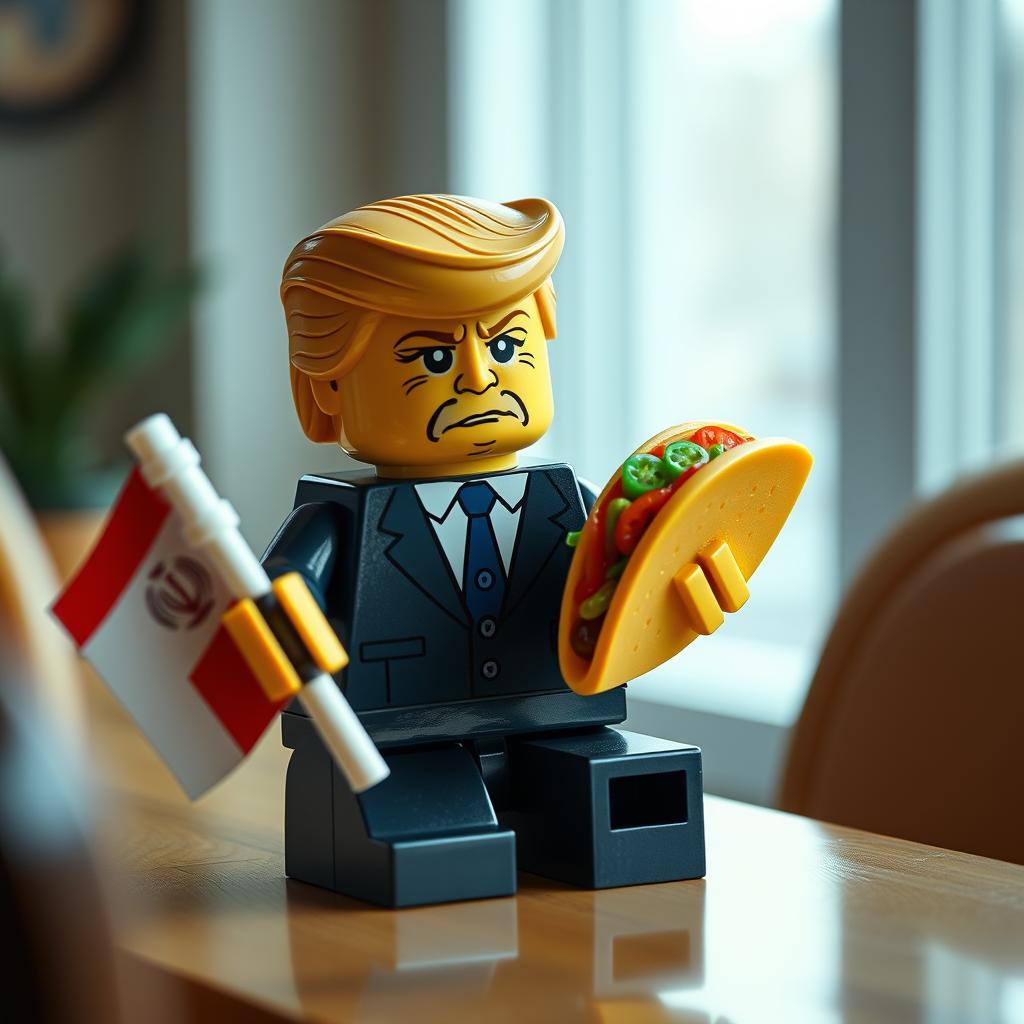
The pro-Iran meme machine trolling Trump with AI Lego cartoons
At a glance:
- Explosive Media, a pro-Iranian activist group, produces sophisticated AI-generated Lego-style videos mocking Trump and US foreign policy
- Their content has garnered millions of views on mainstream platforms since the war began in February
- The group claims independence from the Iranian government but operates with apparent internet access in a country with restricted connectivity
The Latest Lego Trump Video
Minutes after President Donald Trump announced that he would not wipe out "a whole civilization" on Tuesday evening, Explosive Media sprang into action. The team of self-described young Iranian activists had already prepared their latest AI-generated, Lego-inspired Trump video, which features a Trump mini-figure colluding with leaders from Gulf states, Iranian officials pressing a big red button labeled "back to the stone age," and Trump throwing a chair at US generals. This video represents just one of more than a dozen similar productions released since the beginning of the war in February.
The video was released within hours of Trump's announcement, accompanied by the caption: "IRAN WON! The way to crush imperialism has been shown to the world. Trump Surrendered. TACO will always remain TACO." The reference to "TACO" is a knowing nod to the acronym for "Trump always chickens out," with the concluding scene showing a Lego Trump sobbing while holding a white flag and eating a taco. The team even incorporated Iran's 10-point ceasefire proposal into the narrative, demonstrating their preparedness and responsiveness to current events.
From YouTube Channel to Viral Sensation
Explosive Media began its journey in 2025 as a YouTube channel featuring political commentary delivered by a young Iranian man. The initial content failed to gain traction, with most videos accumulating only a couple hundred views. Everything changed in February when the group pivoted to producing Lego-inspired videos scripted, produced, and edited using AI tools—though the team has declined to specify which AI platforms they utilize.
This strategic shift proved immediately successful, with the videos rapidly gaining popularity across platforms like TikTok, X, and Instagram. The group attributes part of this success to their commitment to understanding American culture and audience preferences. "We've committed ourselves to learning more every day about American people and culture," a team member told WIRED. "In this process, Americans themselves have been helping us—and that support and guidance continues. They share impactful tips and ideas with us."
Sophisticated Propaganda with Cultural Nuance
What sets Explosive Media's content apart from previous Iranian propaganda efforts is its sophistication and cultural awareness. While Iranian government accounts have previously posted Lego-style videos, Explosive Media's productions are more intricately scripted and demonstrate a deeper understanding of internet culture and American sensibilities. This has allowed their content to reach a much broader audience in the US than traditional Iranian propaganda.
The group's portfolio includes numerous provocative scenarios: depicting Trump ordering strikes while reviewing an "Epstein File" alongside Satan and Israeli Prime Minister Benjamin Netanyahu; showing Iranian missiles named after figures from Malcolm X to Jeffrey Epstein victims being fired at the US; and portraying Trump holding up a victory sign while his behind is on fire. Many videos feature original English rap tracks, with the group even establishing a dedicated Spotify page to host their musical productions.
Iranian Propaganda in the Digital Age
Iran has a history of using creative content for propaganda purposes, particularly during conflicts. In 2024, the Islamic Revolutionary Guard Corps shared links to a Lego video, and during the Twelve-Day War in 2025, Iranian state media proclaimed victory in another Lego production. However, none of these earlier efforts matched the cultural insight and technical sophistication of Explosive Media's current content.
The Iranian regime has increasingly leveraged social media to promote its perspective to international audiences, combining AI technology with humor and cultural references. Following Trump's warning that Iranians would soon be "living in Hell," the country's embassy in Zimbabwe posted on X suggesting they had lost the keys to the Strait of Hormuz, while the Iranian embassy in Tunisia shared an AI video of Trump walking off Air Force One holding a large white flag.
Measuring Impact and Influence
The effectiveness of Explosive Media's content lies in its ability to distill complex geopolitical issues into accessible, shareable formats. "People are disengaging from some of the real conflict content and looking for something that can distill what's happening quickly and in a language and tone that they understand," explained Moustafa Ayad, a researcher with the Institute of Strategic Dialogue. "Those Lego videos are doing exactly that—they're making it easily accessible to understand the conflict from Iran's point of view, and it's hitting on points of disaffection in the United States at the same time."
The viral success of these videos is undeniable. "I don't think there's another piece of media that has come out of this conflict that has been talked about, re-shared as much as the Lego videos," Ayad noted. This level of engagement represents a significant achievement in digital propaganda, demonstrating both Iranian capabilities to understand American audience preferences and a firm grasp of how social media functions to maximize attention and engagement.
Questions of Affiliation and Access
Despite their claims of independence, Explosive Media's pro-regime stance and apparent access to the internet in a country with severely restricted connectivity have led many to question their relationship with the Iranian government. "Seeing as how the regime in Iran has effectively cut off the internet to everyone else, I think you'd have to be pretty close to the government to have access to the internet," Ayad suggested.
The group maintains that they obtained internet access because they are viewed as a media organization, claiming over 2.5 million followers across various "Iranian messaging channels." Whether officially affiliated with the regime or operating with its tacit approval, Explosive Media represents a new frontier in state-aligned digital propaganda—one that combines technical sophistication, cultural awareness, and social media savvy to influence international perceptions of geopolitical conflicts.
FAQ
What is Explosive Media?
How have Explosive Media's videos been received?
What tools does Explosive Media use to create their content?
More in the feed
Prepared by the editorial stack from public data and external sources.
Original article